Stained Glass Windows of Covenant
In 1947, Charlotte’s Second Presbyterian and Westminster Presbyterian churches merged to form Covenant Presbyterian Church with a combined membership of 2,400 congregants. The church's first construction was the Education Building and Fellowship Hall, where worship services and Sunday School began meeting in June of 1951. The first service in the sanctuary took place on December 20, 1953.
A Ministry of Color
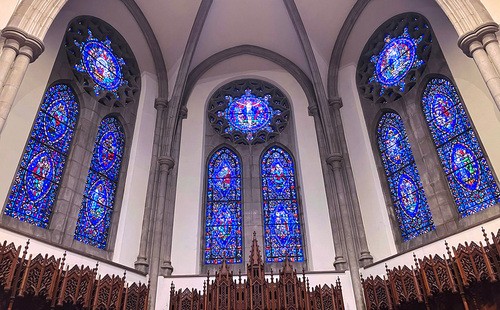
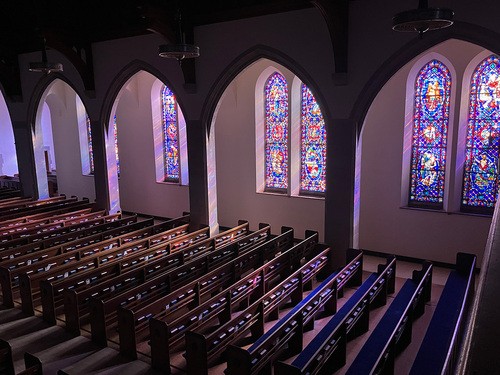
Covenant’s stained glass windows tell the story of our Christian faith, from creation to the early-twentieth-century Presbyterian Church. They were designed by Covenant's founding minister Dr. Warner Hall, working with Dr. John Willet of the acclaimed Willet Studios in Philadelphia. Dr. Willett declared the windows were “a ministry of color…the crowning glory of the church in a beautiful setting.”
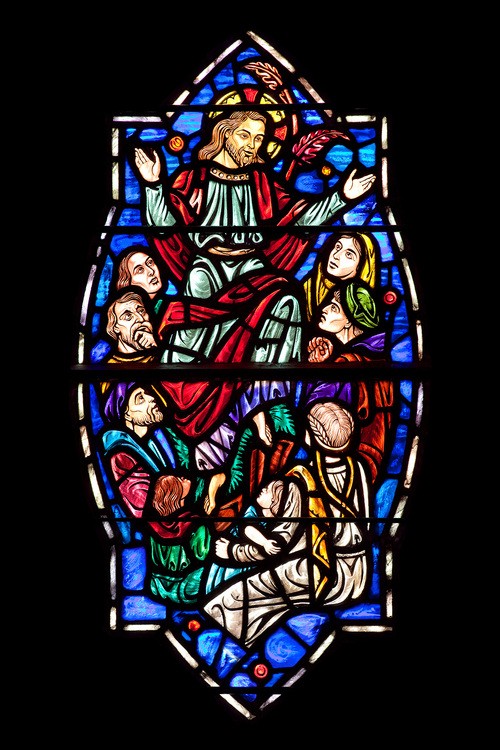
Organized into several groupings, the windows bring out the central themes of faith. In the sanctuary, the four east nave windows chronicle highlights of the Old Testament. The four west nave windows depict the birth, early life and ministry of Jesus. In the transepts we see highlights from the history and service of the Christian church, as well as the prayer and psalm windows. In the apse, the crowning glory of the narrative are the images of Christ’s passion, crucifixion, and resurrection.
In the chapel, three east windows portray the Lord of Death, Life, and Nature, while the west windows interpret biblical passages about the Kingdom of God. The gallery shows the righteous doing good works from the final judgment in Matthew. The apse portrays the Trinity.
Organized into several groupings, the windows bring out the central themes of faith. In the sanctuary, the four east nave windows chronicle highlights of the Old Testament. The four west nave windows depict the birth, early life and ministry of Jesus. In the transepts we see highlights from the history and service of the Christian church, as well as the prayer and psalm windows. In the apse, the crowning glory of the narrative are the images of Christ’s passion, crucifixion, and resurrection.
In the chapel, three east windows portray the Lord of Death, Life, and Nature, while the west windows interpret biblical passages about the Kingdom of God. The gallery shows the righteous doing good works from the final judgment in Matthew. The apse portrays the Trinity.
Reconciliation and Inclusion
In 2020, after the racially motivated murder of George Floyd and others, Covenant called for self-examination and measurable actions within the church to create opportunities for change and reconciliation.
This response required an examination of Covenant’s curriculum, sermons, investments, buildings, art and symbols —including the sanctuary and chapel, where the stained glass windows are the clearest symbolic representation of who we are and what we believe.
After two years of study with researchers, theologians and historians, Covenant came to the following conclusion:
This response required an examination of Covenant’s curriculum, sermons, investments, buildings, art and symbols —including the sanctuary and chapel, where the stained glass windows are the clearest symbolic representation of who we are and what we believe.
After two years of study with researchers, theologians and historians, Covenant came to the following conclusion:
"The actions and views of some of the individuals memorialized in the windows create a worship space that is not welcoming to all. It was disappointing to learn that many who were involved in the history of the church and Presbyterianism were blind to the injustice of racist practices. We believe these individuals sought to live helpful and productive Christian lives. Nevertheless, some engaged in action or expressed views that are at odds with our desire to be a faithful and welcoming congregation."
The congregation unanimously recommended the removal and replacement of four individuals depicted in the sanctuary windows and replace them with images of important twentieth- and twenty-first century Presbyterians in the Charlotte community, highlighting women and African American leaders.
Our New Stained Glass Windows
The individuals and organizations chosen for the new images are important 20th-century leaders who played vital roles in the Presbyterian Church locally and nationally. The committee especially sought women and African Americans who influenced the Presbyterian Church and theology.